
April 2026 AI News


Anthropic: What 81,000 People Told Us About the Economics of AI
The bot applicant: How AI is breaking the modern job search - Greenville Business Magazine
Pangram Labs reports that AI is transforming job searches, with many applicants using it to generate resumes and attend interviews, complicating recruitment.
 Destiny Akinode for Pangram Labs
🍳 The answer to “how do I keep up with AI?”
A free daily briefing in plain English, made for you
 Marissa Goldberg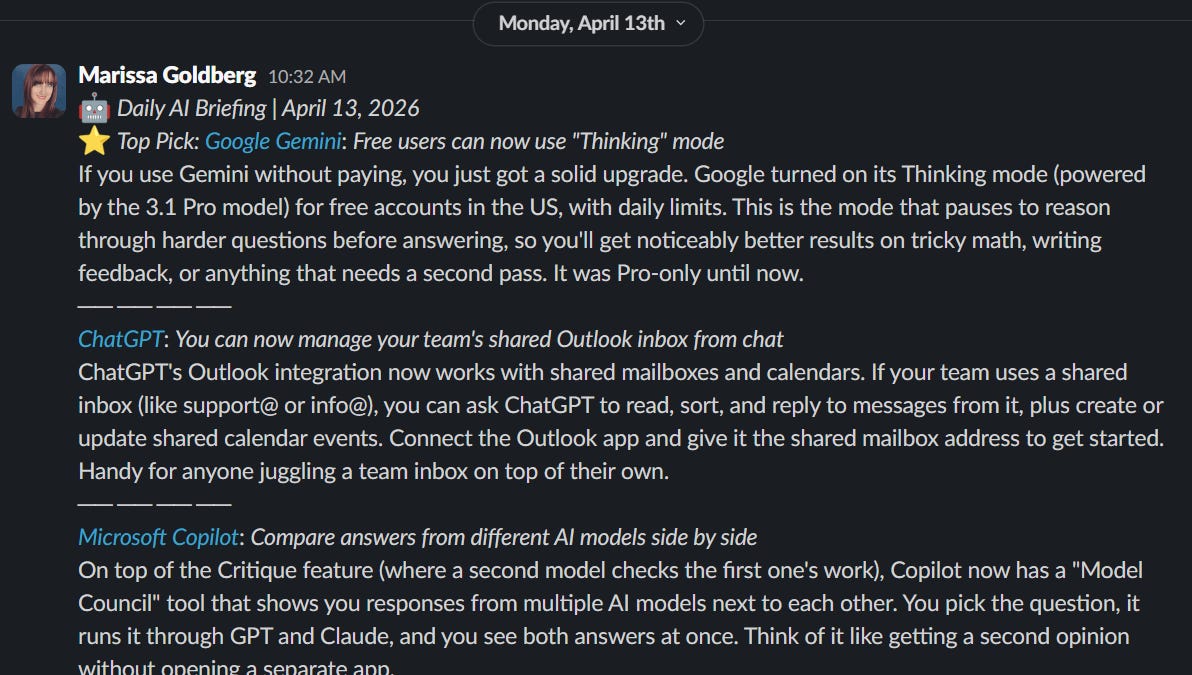
More job seekers are using AI to craft resumes. It’s slowing the hiring process
In a recent Robert Half survey, 65 of hiring managers said AI-generated resumes are creating challenges for their organization, while 89 per cent said it has increased workloads
Jared Lindzon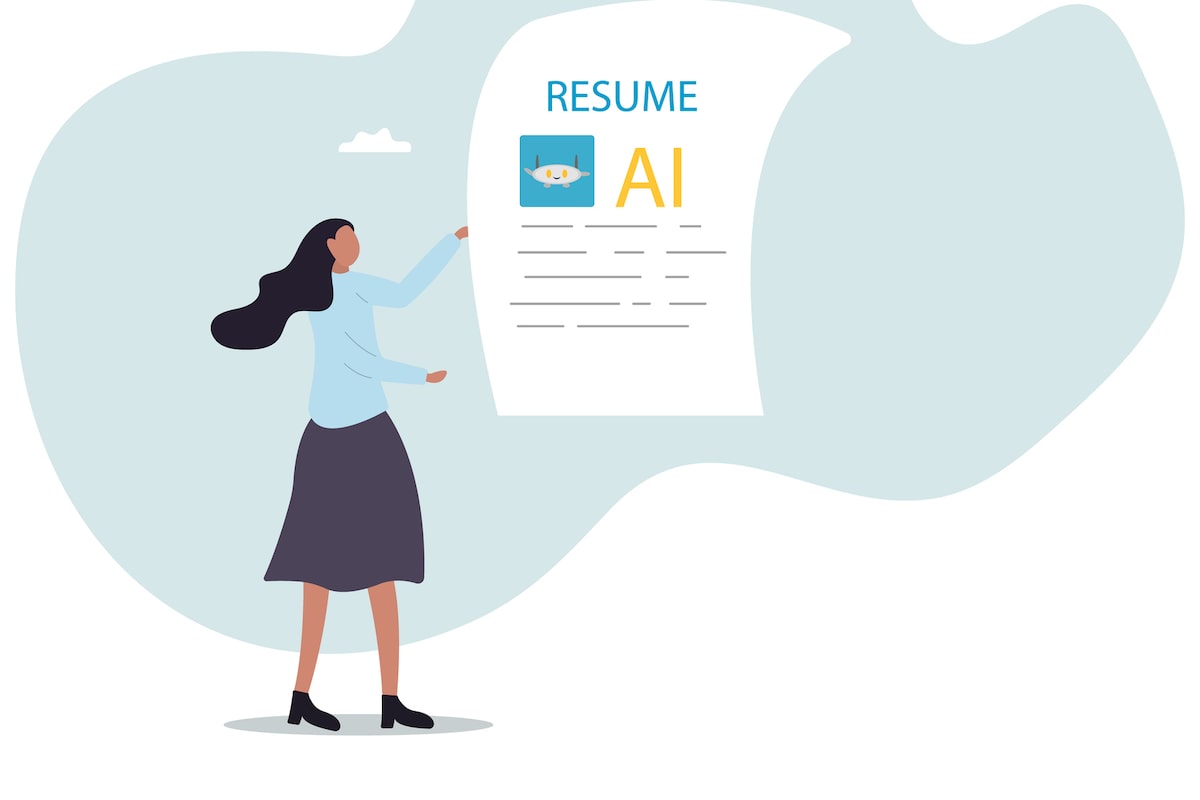
OpenAI: The AI jobs Transition Framework
The 2026 AI Index Report | Stanford HAI
Industrial Policy for the Intelligence Age: Ideas to Keep People First
Reality of AI’s impact on employment clashes with C-suite optimism
In March, the US jobs market recorded 178,000 new jobs, marking little change from the month before, according to the Bureau of Labor Statistics. The anemic growth in job listings comes amid volatile policy swings from the White House, increased energy prices due to the US and Israel’s war with Ira…

6 mistakes job seekers should avoid when using AI for résumés, cover letters, and networking
Job-search experts think it’s fine to use AI to help with résumés, cover letters, and networking but to avoid some mistakes.
Madison Hoff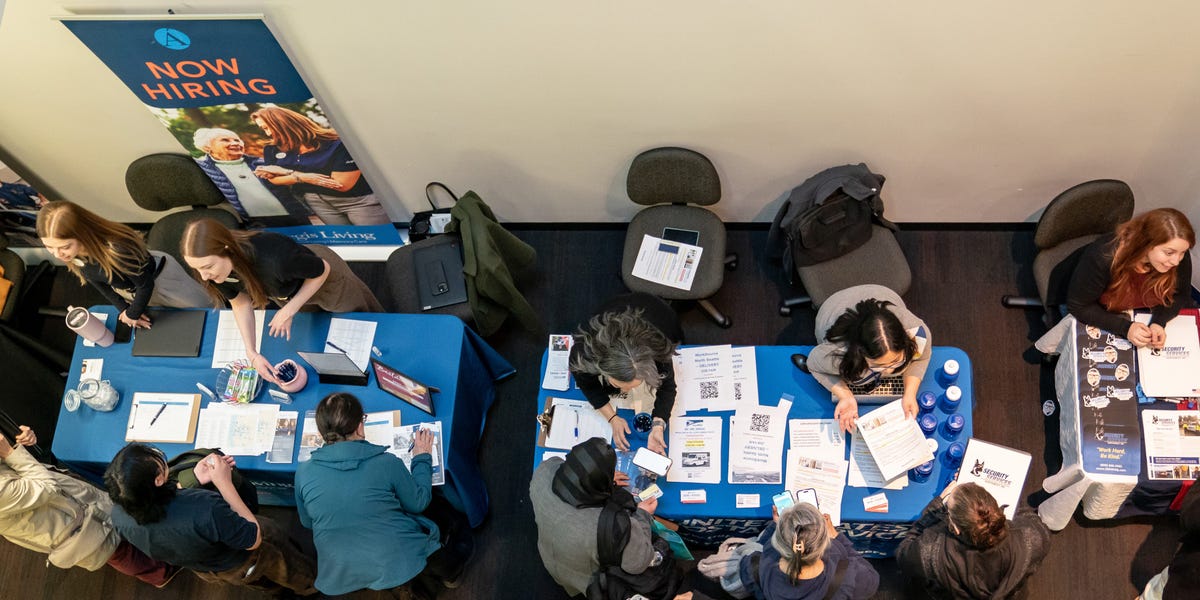
What Bad Networking Teaches Us About Using AI in Your Job Search
No mediocre worker is safe — the bar for keeping your job just went up
Recruiters say companies are swapping out employees for more skilled or lower-cost talent as hiring slows and budgets tighten.
 Jacob Zinkula
Agentic Web: Weaving the Next Web with AI Agents
The emergence of AI agents powered by large language models (LLMs) marks a pivotal shift toward the Agentic Web, a new phase of the internet defined by autonomous, goal-driven interactions. In this paradigm, agents interact directly with one another to plan, coordinate, and execute complex tasks on behalf of users. This transition from human-driven to machine-to-machine interaction allows intent to be delegated, relieving users from routine digital operations and enabling a more interactive, automated web experience. In this paper, we present a structured framework for understanding and building the Agentic Web. We trace its evolution from the PC and Mobile Web eras and identify the core technological foundations that support this shift. Central to our framework is a conceptual model consisting of three key dimensions: intelligence, interaction, and economics. These dimensions collectively enable the capabilities of AI agents, such as retrieval, recommendation, planning, and collaboration. We analyze the architectural and infrastructural challenges involved in creating scalable agentic systems, including communication protocols, orchestration strategies, and emerging paradigms such as the Agent Attention Economy. We conclude by discussing the potential applications, societal risks, and governance issues posed by agentic systems, and outline research directions for developing open, secure, and intelligent ecosystems shaped by both human intent and autonomous agent behavior. A continuously updated collection of relevant studies for agentic web is available at: https://github.com/SafeRL-Lab/agentic-web.
 Yingxuan Yang
Forecasting the Economic Effects of AI
Ayobami Esther Akinnagbe: How to Stand Out in the Job Interview Without Relying on AI
I recently interviewed a candidate whose behaviour during the interview left me genuinely surprised. A few minutes into our conversation, he mentioned that his internet connection was unstable and asked if he could turn off his camera. We agreed that, as these things happen, virtual interviews often come with technical challenges. However, from that moment […]
 Akinnagbe Ayobami Esther
New MIT jobs report: Why AI’s work impact will roll in like a rising tide, not a crashing wave
AI may be ‘minimally sufficient’ at most of your text work tasks by 2029, according to new MIT research. Here’s why that’s good news.
 Radhika Rajkumar